News
In 2024, most technology fields will revolve around artificial intelligence. (AI). At the same time, 5G, virtual reality and augmented reality (VR/AR), the Internet of Things (IoT),… are also expected to continue being prominent technologies.
Technology today is developing at a breakneck pace, allowing society to change and progress faster.
Emerging technologies and the latest technological trends are being researched and continuously updated every day. That means not only IT experts but everyone must equip themselves with the necessary skills to meet the development needs of the socio-economic landscape.
At the same time, quickly adopting and adapting to emerging technology trends also helps businesses and organizations shape their development strategies, creating competitive advantages in the future.
Below are the technologies predicted to have a significant impact on the world and human life in 2024.
1. Generative-AI (Generative AI)
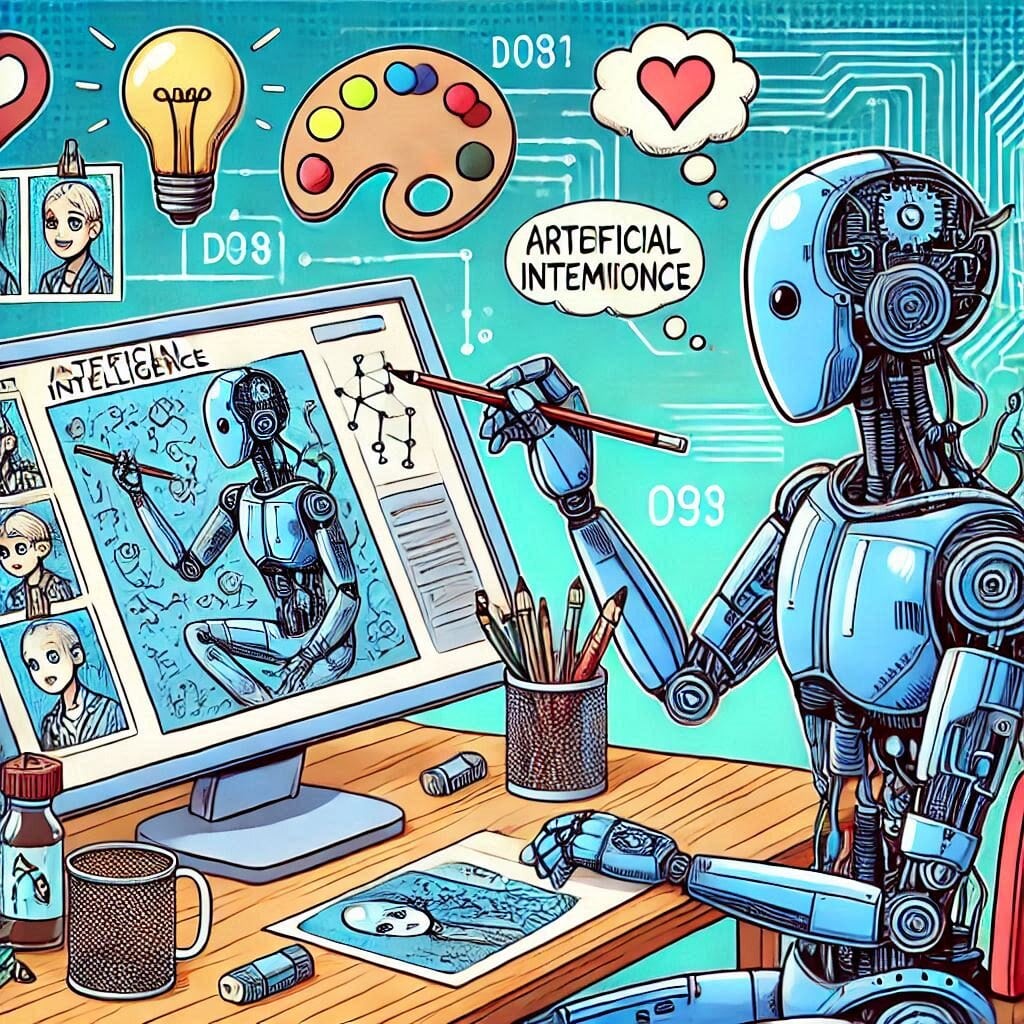
Generative-AI, an advanced technology, has revolutionized various industries by enabling machines to create content similar to work produced by humans. It encompasses a range of applications, from text generation to image synthesis and even composing music, poetry, and prose,…
Generative AI has become a game changer for both businesses and consumers in 2023. This technology is not new but is becoming increasingly popular. In the coming years, Generative AI will continue to be one of the most influential technology trends, not just in 2024.
Once proficient in traditional AI, individuals can pursue exciting job roles in the same field, such as artificial intelligence research, data science, and the creative industry.
The increasingly expanding applications of generative AI promise a bright future for those who master this technology, offering opportunities to shape how people interact and create content in the digital age.
Instead of worrying about AI dominating, replacing, or harming humans, businesses should view AI as a beneficial tool that maximally serves their needs and development.
2. Quantum computing Quantum computing
Quantum computing is a rapidly emerging technology trend since early 2024, set to revolutionize the technological landscape.
This incredible technology trend is related to preventing the spread of the Corona virus and developing potential vaccines thanks to the ability to easily query, monitor, analyze, and act based on data from any source.
Another field where quantum computing is developing applications is banking and finance, aimed at managing credit risk, optimizing transactions, and detecting fraud.
Quantum computers (also known as quantum supercomputers) currently operate many times faster than conventional computers. Some major brands such as Splunk, Honeywell, Microsoft, AWS, Google, and many others are currently involved in creating innovations in this field.
The revenue of the global quantum computing market is expected to exceed 2.5 billion USD by 2029. McKinsey predicts that quantum computing could reach a value of nearly 1.3 trillion USD by 2035.
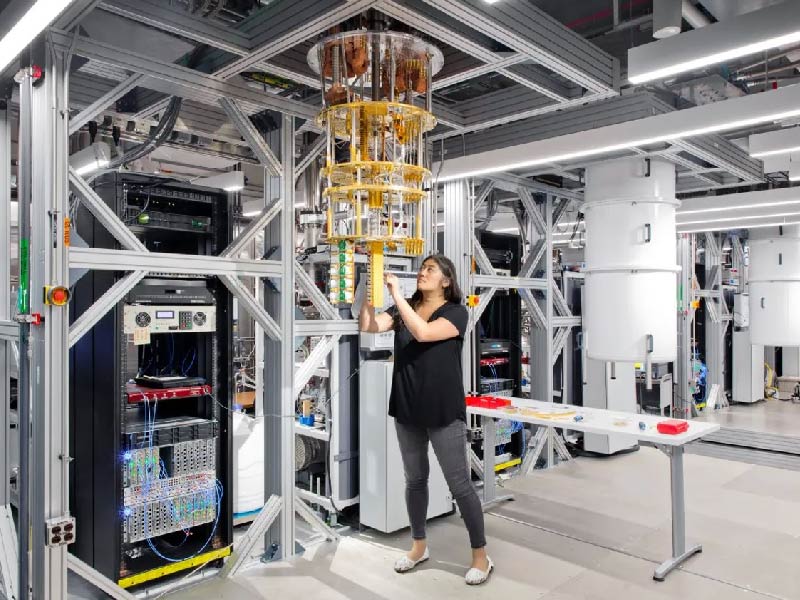
The field of quantum computing includes hardware research and application development – Photo: Internet
3. Sustainable technology solutions
In 2024, sustainable technology will continue to take center stage as nations and businesses strive to meet their net-zero commitments.
Concerns about climate change are increasing, and the shift towards sustainable technology is clearly reflected in the development of renewable energy solutions, green data centers, and carbon-neutral activities. Nowadays, sustainable and environmentally friendly solutions are one of the prominent technology trends.
The tech giants have been embracing green technology and making significant strides towards sustainability and reducing net emissions. For example, Apple has planned to make all its products carbon neutral by 2030, while Google aims to achieve zero emissions across all its operations and value chain by 2030.
Businesses are facing the challenge of technological innovation, not only to provide advanced functionality but also to minimize environmental impact. This trend reflects the growing awareness of the role of technology in addressing global issues and promoting a more sustainable future.
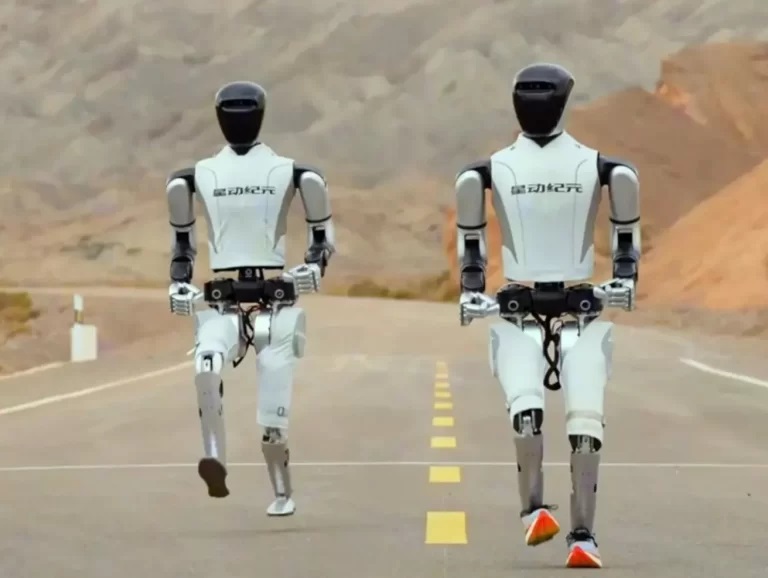
4. Automating processes with robots
Like AI and machine learning, robotic process automation (RPA) is the use of technology software to automate business processes such as transaction processing, data processing, email responses, etc. RPA automates repetitive tasks, freeing up labor so that humans can focus on higher-level goals.
Some studies estimate that RPA automation will threaten the livelihoods of over 230 million knowledge workers, equivalent to about 9% of the global workforce, but RPA is also creating many new jobs while transforming existing ones.
McKinsey found that less than 5% of jobs can be fully automated, but about 60% can be partially automated.
See more articles: What is a robot? Famous types of robots today
For the information technology industry, RPA brings career opportunities, including development, project management, business analysis, solution building, and consulting. These jobs are well-paid, making them the next technology trend that many people are interested in.
5. Virtual reality and augmented reality Virtual reality and augmented reality
The next special technology trend is Virtual Reality (VR), Augmented Reality (AR), and Extended Reality. (Extended Reality – ER).
VR immerses users in a virtual environment while AR enhances the real-world environment. Although so far, this technology trend has mainly been used for gaming, it is also applied in education for training, visual simulation, and abstract concepts.In 2024, these forms of technology may be more deeply integrated into daily life. Often operating in parallel with some other emerging technologies mentioned in this list, AR and VR have tremendous potential in training, entertainment, education, marketing, and even rehabilitation.
6. Blockchain (Blockchain)
Most people think of Blockchain technology in relation to cryptocurrencies like Bitcoin. However, Blockchain provides useful security in many other ways.
In the simplest terms, on a blockchain, data can only be added, not removed or changed. Therefore, the term “chain” describes the process by which participants are creating a chain of data.
The inability to change previous blocks is what makes it secure. Additionally, Blockchain is governed by consensus. No entity can control the data. With blockchain technology, there is no need for a trusted third party to oversee or validate transactions.
Some industries are adopting and implementing Blockchain, and as the use of this technology increases, the demand for skilled experts also rises. From a holistic perspective, this will be a technology that continues to receive attention in the near future.
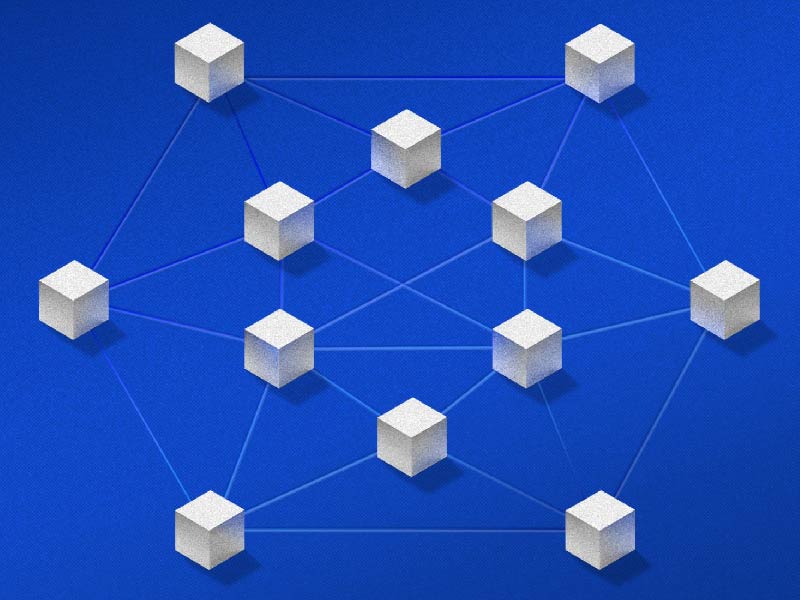
Blockchain technology is widely known for its many practical applications.
Photo: Internet
7. Internet of Things Internet of Things
In modern society, many “things” are currently being built with WiFi connectivity, meaning they can be connected to the Internet and to each other. Therefore, the Internet of Things (IoT) is the future, allowing handheld devices, household appliances, self-driving cars, and many other things to be connected and exchange data over the Internet.
Consumers use and benefit from IoT. In a smart home, homeowners can lock/unlock doors remotely while at work, preheat the oven on their way home, monitor the physical activities of family members through an app,…
For businesses, IoT can bring safety, efficiency, and better decision-making support when data is collected and analyzed. This technology enables predictive maintenance, accelerates healthcare, improves customer service, and brings benefits that humans have never even imagined.
We are only at the early stage of the development journey of this technology trend: Forecasts show that by 2030, around 50 billion IoT devices will be used worldwide, creating a massive network of widely used connected devices.
8. 5G
When 3G and 4G technologies allow for internet browsing, the use of data-based services, and increased bandwidth for streaming on media platforms, 5G services are expected to revolutionize current life.
By supporting services based on advanced technologies such as AR and VR, along with cloud-based gaming services and more, 5G is expected to be used in factories, connecting smart cameras to improve safety and traffic management, controlling smart power grids, and even smart retail,…
9. Metaverse
Metaverse (virtual universe) is a virtual digital universe, interconnected, where users can interact with each other and with the digital environment in real-time. It combines augmented reality (AR), virtual reality (VR), and many other technologies to create a shared experience that is as vivid as in the real world.
Currently, many companies are exploring and finding ways to apply the metaverse in gaming, social media, education, healthcare, and more. This trend represents the convergence of the digital and physical worlds. This is also a technology expected to have a profound impact on communication, entertainment, and business collaboration.
10. Digital twins Digital twins
Digital twins are virtual replicas of physical objects, processes, or systems. These digital representations are created using data from sensors, IoT devices, and other sources.
Digital twins enable organizations to monitor, simulate, and analyze assets and real-world operations in a virtual environment. This technology is applied in manufacturing, urban planning, healthcare, and more.
By creating a digital twin, businesses can optimize processes, improve decision-making, and enhance efficiency, safety, and sustainability.
11. Cybersecurity Cybersecurity
Cybersecurity has been around for a while and has always been a technology trend that garners attention and development alongside other emerging technologies. Part of the reason is the increasing emergence of new threats.
Hackers who constantly attempt to access data illegally will not give up and will continue to find ways to infiltrate systems to steal information, even when organizations have implemented the toughest security measures.
As long as there are hackers in society, cybersecurity will remain a leading technology because it must continuously evolve to counter those hackers. According to Gartner, by 2025, 60% of organizations will consider cybersecurity risk as the main deciding factor in executing transactions and business commitments with third parties.
Above are the prominent technology trends for 2024. For long-term development, businesses and individuals need to take the lead to enhance their competitive advantage in the upcoming period.