News
South Korea is moving towards implementing AI-integrated electronic textbooks
Korea’s electronic textbooks integrated with AI technology are designed to support personalized learning, adjusting the content according to each student’s level and pace.
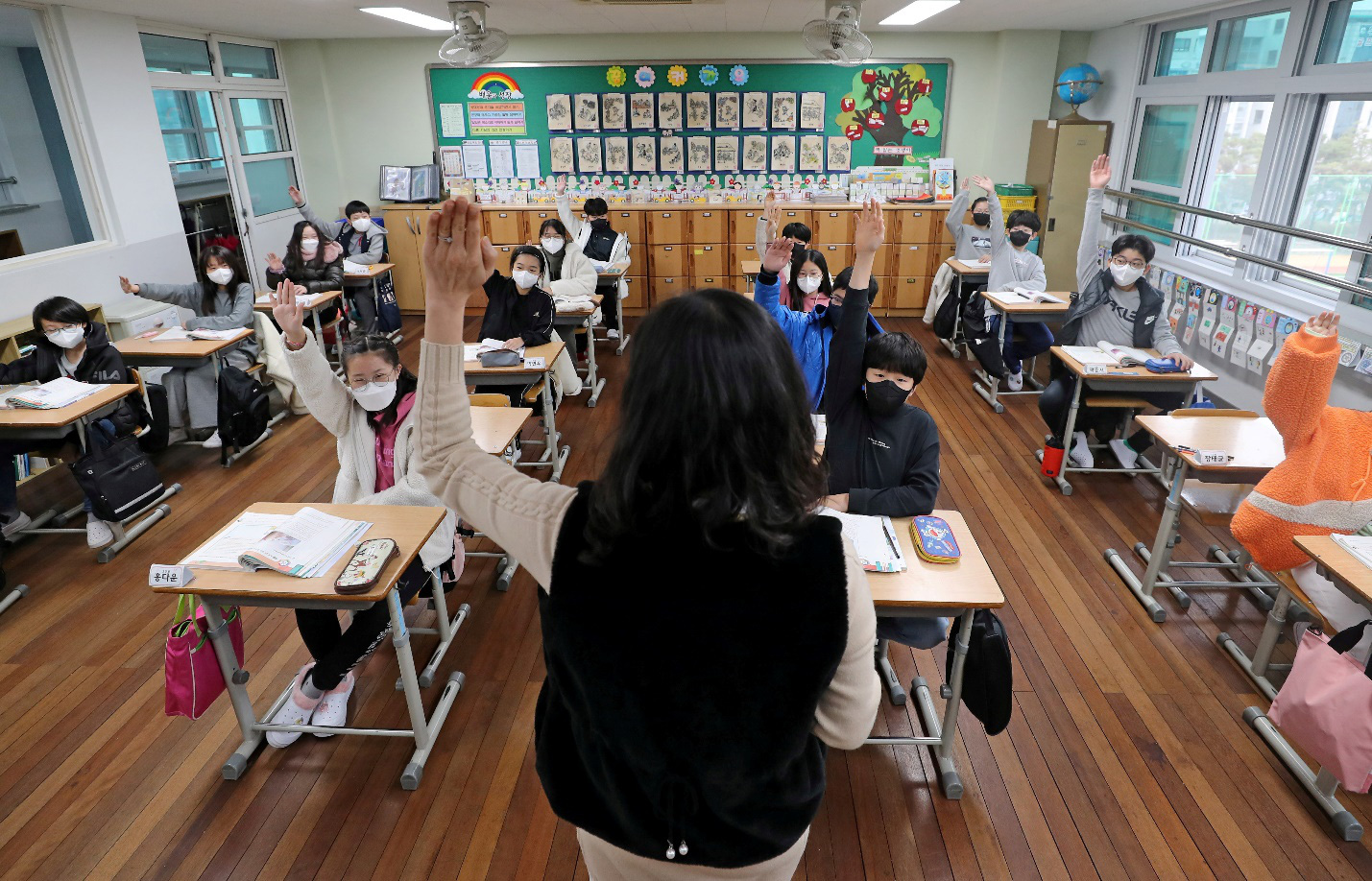
Elementary school students in the city of Daejeon, South Korea – Photo: reuters.com
The South Korean Ministry of Education announced that it will soon complete the verification and editing of electronic textbooks integrated with artificial intelligence technology. (AI). The complete version of this new generation textbook will be distributed to schools in South Korea next December. After that, each school will review the materials and select an appropriate AI electronic textbook for each subject to incorporate into their teaching.
Starting from March 2025, teachers will have to use both paper textbooks and AI. Digital textbooks will be applied to English, Mathematics, and Information Technology classes for grades 3 and 4 in primary schools, as well as for 6th-grade students in middle and high schools.
These new digital textbooks are designed to support personalized learning, adjusting the teaching content to match the level and pace of each student.
At the same time, by applying artificial intelligence technology, teachers will find it easier to develop suitable teaching plans for the class and students, as they will also have access to data to create more tailored teaching plans for each student. This will change the traditional classroom model, where all students learn at the same pace, to a more flexible teaching method, allowing teachers to redesign the curriculum based on the specific needs of each student.
This will help change the traditional classroom model, from students learning at the same pace to a more flexible approach, allowing teachers to redesign the curriculum to meet the specific needs of each student.
Although this initiative is seen as a way to accelerate the modernization of education, there are still warnings from experts that the application of AI in the classroom may be premature due to concerns that it could exacerbate the existing inequalities among students.
Currently, many teachers are still wondering whether they are capable of teaching using a system different from traditional methods. Parents also expressed opposition to the idea of officially introducing digital devices into the classroom, especially as a law banning smartphones in schools is being considered.
Professor Park Joo Ho from the Department of Education at Hanyang University believes that excessive use of technology can negatively impact students’ reading, writing, and creative abilities. AI currently can only assess students’ problem-solving skills, but it is still too early to fully integrate this technology into the classroom.
Source: TTXVN