News
The breakthrough of the 21st century – how will artificial intelligence technology be applied in the finance and banking sector?
The Vietnam Banking Association and IEC Group recently organized the Smart Banking 2024 Conference and Exhibition on October 29 under the auspices of the State Bank of Vietnam.
The seminar and exhibition were organized with the aim of connecting top leaders and experts in the finance-banking sector, providing in-depth insights into the latest technologies to identify breakthrough strategies for building a safe and sustainable digital future for the banking industry.
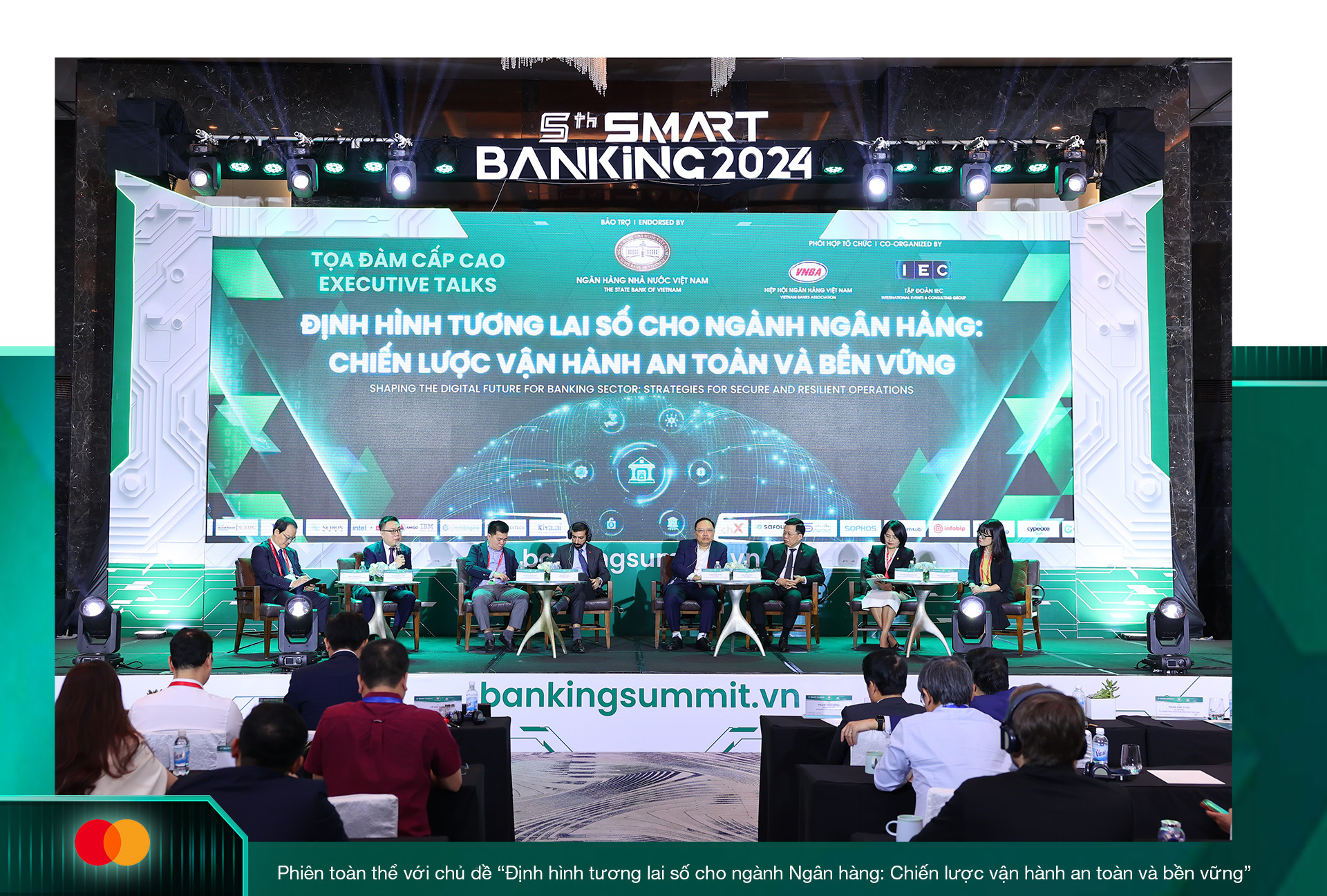
With the theme “Shaping the Digital Future for the Banking Sector: Safe and Sustainable Operational Strategies,” this year’s event emphasizes the importance of safety measures and sustainable development strategies for the banking industry in the digital space, promising an engaging program with in-depth discussions.
This is a forum for parties to share perspectives and strategies on important issues in the banking sector during the digital transformation journey, ensuring safety, data security, and promoting sustainable growth, through: 1 plenary session, 3 thematic sessions, a live cyber defense drill – DF Cyber Defense, and an international exhibition.
At the plenary session of the event, with the participation of representatives from the State Bank, representatives from various ministries and sectors: the Ministry of Public Security, the Ministry of Finance, the Ministry of Information and Communications… and experts in the field of finance and technology; the topic of Open Banking is explored from a practical perspective.
Currently, in the world, open banking is the first platform for people to start using very basic banking services such as opening accounts and issuing cards.
However, open banking is evolving further into open finance, where it not only provides financial services but also extends to other services within the ecosystem, in other words, connecting with other entities in the financial sector such as insurance companies… From there, businesses can offer customers better choices for managing their finances. And finally, moving towards an open economy, which means linking financial and non-financial aspects.
A representative from Mastercard shared three fundamental factors for moving towards open banking and further into open finance and an open economy.
First is about the architectural infrastructure. Each open banking platform must have detailed terms, regulations, and data standards, such as which data must be shared, which data is encouraged to be shared, and which data is left for participants to choose. Such a set of standards will help participating members develop appropriate strategies for implementation.
Next is about user rights. The essence of open banking is to empower users, and users need to understand how they are being empowered. However, a study in the UK shows that nearly 60% of users still do not fully understand their rights after 5 years of open banking implementation.This highlights the importance of raising awareness and connecting with users so that they understand their rights.
Finally, but no less importantly, it is the strategy of the participants. Banks can choose to participate passively by complying with open banking regulations, or actively engage in building and viewing it as a strategy to create new surplus value for the business. It depends on the decision of each bank.
These three factors will determine the implementation of open banking by businesses as well as the move towards open finance and an open economy.
In today’s digital economy, the concept of money and the way value is exchanged are undergoing profound changes. Besides traditional cash and bank balances, digital currencies such as central bank digital currencies (CBDC), carbon credits, and crypto assets like NFTs are increasingly being used widely. This shift reflects the importance of digital assets, as up to 94% of central banks worldwide are exploring or developing CBDCs to adapt to online commerce.
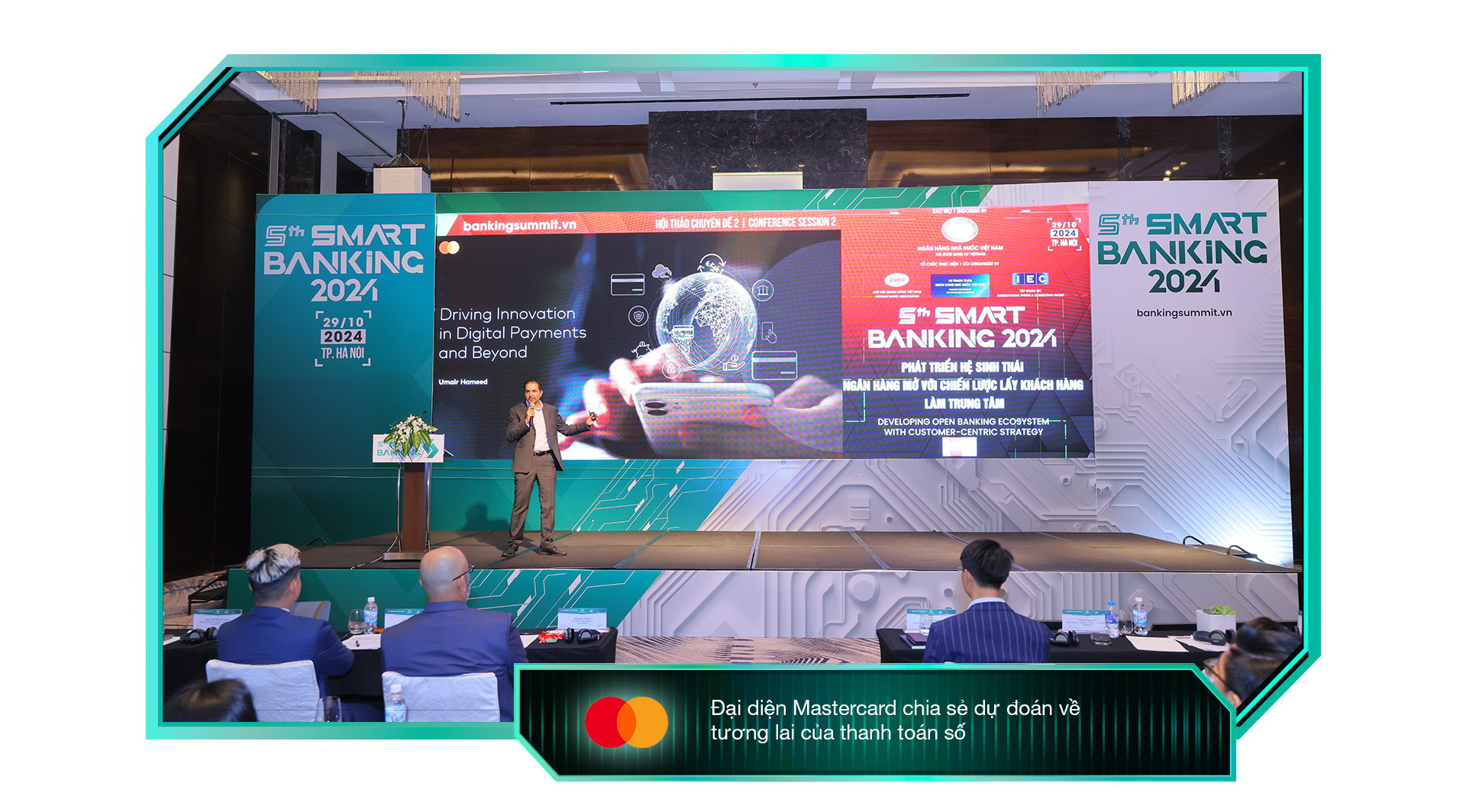
At the second session of Smart Banking 2024, themed “Developing an Open Banking Ecosystem with a Customer-Centric Strategy,” a representative from Mastercard shared in-depth knowledge and experience on “Driving Innovation in Digital Payments and Beyond.”

In the context of the digital transformation of various assets, new technologies also enable the tokenization of assets, from real estate to personal belongings, in digital form and facilitate easy exchange.
It is expected that the total value of tokenized assets worldwide could reach nearly 4 trillion USD by 2030. Therefore, financial institutions now need to provide secure storage and exchange services for digital assets in a tightly regulated environment.
At the same time, the challenges in traditional payments, such as dependence on mobile devices, online payment authentication… will gradually improve with biometric technology and payment systems.
At the same time, the challenges in traditional payments, such as reliance on mobile devices and online payment authentication, will gradually be improved with biometric technology and integrated payments, allowing devices and vehicles to automatically conduct transactions, moving towards a future of faster and more convenient transactions, even vehicles automatically making payments.
This transformation will meet consumers’ demand for quick and convenient transactions, fundamentally changing the way we perceive and manage value in the digital age.

“Open banking” is a concept that contrasts with the traditional, closed nature of banking. Initially, the banking sector was hesitant to embrace open banking, but later, regulations in Europe required greater transparency and data sharing, bringing both challenges and new opportunities for the financial sector.
Through the discussion in the second thematic workshop, a representative from Mastercard talked about the main trends in financial services, particularly regarding personalization through open banking and its impacts on customer experience.

Initially, when approaching “open banking,” banks face the risk of sharing customer data, which could even increase customer churn rates. However, the competition brought by open banking benefits consumers, making it easier for them to compare services between providers and encouraging financial institutions to improve service quality.
For certain customer groups, especially those with credit needs, open banking can facilitate easier access to services by allowing broader data sharing for credit assessment. This approach is gradually developing, and banks are increasingly viewing it as an opportunity to improve customer experience.
In Vietnam, to realize the potential of open banking, cooperation beyond the scope of banks is needed, including the participation of the government and financial platforms to build a cohesive ecosystem. Although there are still many challenges, clear case studies along with strong partnerships will be crucial factors in driving this development.

Session 3 brings content centered around the theme “Enhancing safety and security in the era of digital banking transformation.” Notably, the roundtable discussion with representatives from Mastercard, IBM, Samsung Vina, Techcombank, Lenovo Vietnam, Hackuity, and Sophos unveiled in-depth solutions contributing to enhancing the safety and security of online transactions in the digital technology era.
In the roundtable discussion, a representative from Mastercard shared insights on the importance of emerging technologies like AI for safety and security issues in the digital age, from the perspective and experience of a leading global technology company in the payment sector.

Stories about AI, from Reactive AI, Generative AI to Physical AI, are currently a highly discussed topic. As a technology company in the payment sector, Mastercard focuses on using AI to ensure and enhance the security and safety of its systems. This is one of the top priorities that Mastercard focuses on.
In fact, it is very difficult for humans to keep up with AI in processing large amounts of data within a certain timeframe. This is considered a major threat to the security and safety of the digital economy. However, businesses can fully utilize AI to build protective measures to keep their systems operating more safely.
Worldwide, Mastercard has harnessed the power of AI for over a decade to protect customers from fraudulent activities without affecting the user experience. Mastercard owns the Mastercard Decision Intelligence solution, through which all transactions occurring within the Mastercard network are evaluated. Mastercard has been and is currently applying AI technology to protect over 143 billion transactions each year.
At the same time, Mastercard continuously improves technology and solutions, not only by applying new technology but also by optimizing existing technology. In the near future, Mastercard will launch the Mastercard Decision Intelligence Pro solution, applying GenAI to filter financial data and track transactions.
Last September, Mastercard also invested 2.6 billion USD to expand its cybersecurity services by acquiring Recorded Future, a global company in the field of Threat Intelligence. This is a specific example of applying AI to ensure safety in the payment sector.

Not only limited to cybersecurity, the technological advancements supported by AI from Mastercard also provide solutions for next-generation issues.
These solutions empower users through advanced digital tools, supporting the AI journey of customers, including personalization, digital identity, next-generation retail experiences, and a smart multi-channel payment network with self-learning capabilities.
The biggest issue when using AI is how to understand customers better. Expanding the customer data file by using better technology will help businesses understand customer spending trends at specific locations, thereby ensuring a seamless payment experience for customers.
As a global technology company in the payment sector, Mastercard is committed to driving Vietnam’s digital transformation, particularly in the banking industry. Mastercard can connect all stakeholders in the ecosystem and leverage pioneering technology along with global expertise to make payments simpler, smarter, safer, and more seamless.
Collection channel: Online newspaper