News
Chinese scientists create a robot with a human brain?
Chinese scientists have developed a type of robot powered by a human brain cultured in the laboratory.
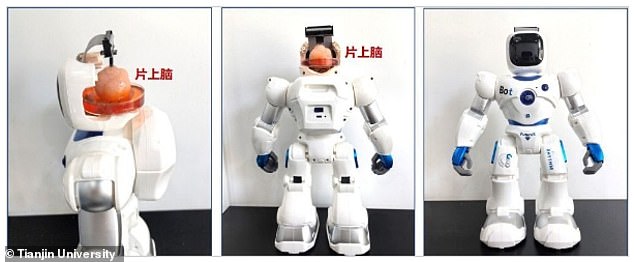
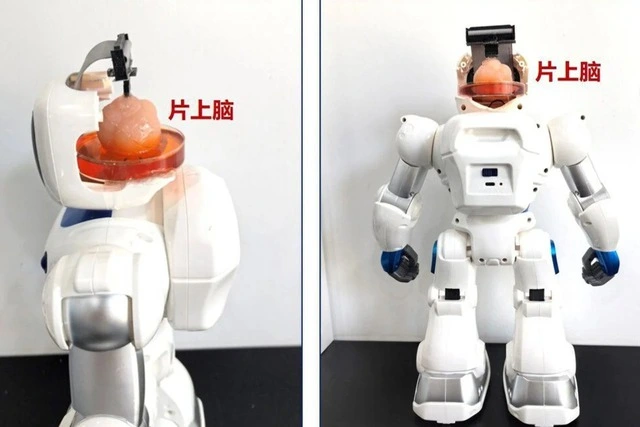
The robot is equipped with an artificial brain and neural chip developed by Chinese scientists. Photo: Tianjin University
According to the Daily Mail, the robot was developed by scientists at Tianjin University, operating by using a brain organoid cultured in the laboratory, a cell mass, and a computer chip that interacts with the brain’s nervous system.
The robot is described as a “brain-on-a-chip” that functions like a human brain, using sensors and artificial intelligence (AI) algorithms to teach the robot to move, grasp objects, and avoid obstacles.
The group of scientists claims that this brain exhibits signs of intelligence similar to that of the human brain, enabling the robot to move its limbs autonomously. The research could lead to methods for repairing damage to the human cortex and creating other techniques to heal neurological disorders.
The team of scientists used human stem cells—a type of cell that forms brain tissue in the body—to develop this brain. They implanted the brain into a computer chip that sends commands to the robot’s body. This is a combination of human cells and a computer chip that functions like a human brain.
The robot uses a brain-computer interface (BCI) that combines electrical signals emitted from the brain with a computer chip. This interface is a similar system used to create Elon Musk’s Neuralink chip, which was implanted into a patient’s brain, allowing the person to control a computer with their thoughts.
Neuralink’s device is powered by a custom chip inside the implant, which processes signals and transmits them to a computer via a standard Bluetooth connection. However, the Chinese researchers have not shared how their robot transmits signals.
Mr. Ming Dong, the lead author of the study shared that to create this “living machine,” the research team used pluripotent stem cells – a type of cell present during early embryonic development – to form organoids that differentiate into various cell types found in the brain, including tissue. Organoids are three-dimensional organ-like structures cultured in the laboratory, self-organized from stem cells.
The scientists cultured these stem cells for about a month until they developed characteristics similar to neurons. However, Chinese scientists have not yet revealed how to train the organoid for the robot to know when to perform tasks.
The research team stated that this technology still faces “bottlenecks” such as slow growth and insufficient nutrient supply, including antioxidants, fibers, and minerals.
When the organoids are implanted into the brain, they are functionally connected using low-intensity ultrasound. Low-intensity ultrasound stimulation will recreate human tissues to form neurons that send messages from the brain, allowing the robot to move autonomously.
Researchers explain that the robot has no eyes and only reacts through electrical signals and sensors sent by nerve cells.
According to the South China Morning Post, human stem cell transplants are considered a promising strategy in brain function recovery, through the replacement of lost neurons and the regeneration of new neural pathways.
However, the research is still in the early stages of development, and it remains unclear whether such organs can be used to repair or regenerate damaged brain tissue.
The new study was published a few days after Japanese scientists grafted human skin tissue and dermal structures onto a robot’s face to mimic human emotions.

Experts created special holes on the robot’s face, allowing the skin layer to adhere tightly. Photo: Daily Mail
Scientists at the University of Tokyo have released a video showing the smiling face of a robot created from lab-cultured human skin. According to the research team, the robot with real skin not only looks increasingly like a real person but can also self-heal if damaged.
Collected material: Newspaper