The rapid advancements in technology have transformed various fields of life, and education is no exception. In this context, the integration of robots into education is opening up new opportunities, enabling students to learn in more engaging, dynamic, and effective ways. Specifically, educational robots offer students a modern learning approach that not only enhances their personal development but also boosts creativity and logical thinking.
Educational Robots: A Breakthrough in Learning Methods
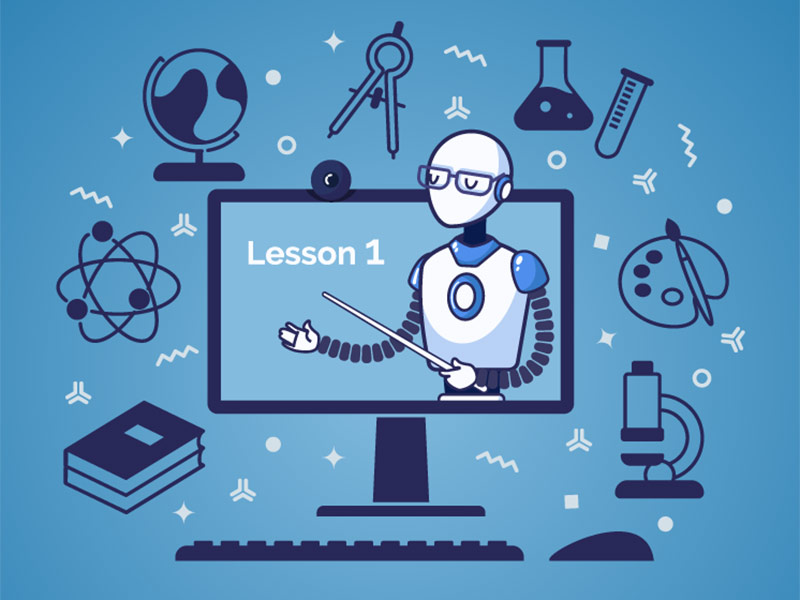
Educational robots are programmed devices designed to support teaching and learning in educational environments. They are not only a tool to deliver knowledge but also help students develop essential soft skills, such as problem-solving, teamwork, and critical thinking. Robots engage students in interactive learning activities where they don’t just absorb theory but apply it to real-world situations.
One of the most significant areas where educational robots have had a profound impact is in STEM (Science, Technology, Engineering, and Mathematics). Robots provide students with early exposure to technology, from programming and controlling to designing robots. This hands-on experience ensures students not only grasp theoretical knowledge but also learn how to apply it practically and effectively.
Integrated Constructive Robotics in Education (ICRE)
The Integrated Constructive Robotics in Education (ICRE) model is a prime example of successful collaboration between technology and education. This innovative teaching method enables students to participate in not only traditional learning activities but also hands-on tasks where they program, design, and control robots. Through this model, students gain a deeper understanding of how technology works, while also enhancing their creativity, problem-solving skills, and logical thinking.
Pilot studies using the ICRE model have been conducted in various schools, with educators, students, and technology experts evaluating the effectiveness of this approach. The results reveal that the ICRE model not only provides students with a realistic, dynamic learning experience but also improves their ability to grasp STEM-related concepts more efficiently.
Additionally, the ICRE model helps bridge the gender gap in STEM education. By fostering a positive, inclusive learning environment, it encourages both male and female students to participate in technology-based activities, breaking down stereotypes that STEM fields are only suited for men.
The Benefits of Integrating Educational Robots
Integrating robots into education brings numerous benefits to both teachers and students. For students, robots are more than just a learning tool—they become a companion throughout their learning journey. Students can participate in play-based learning activities, making the process of absorbing knowledge more enjoyable and engaging. This approach is crucial in motivating students to develop a love for learning.
For teachers, educational robots enable personalized teaching methods that cater to the diverse learning needs of individual students. With the help of robots, teachers can easily track students’ progress, identify areas where they struggle, and implement targeted strategies for improvement.
Moreover, educational robots help enhance students’ soft skills, including communication, teamwork, and problem-solving. In a classroom setting that incorporates robots, students must collaborate to achieve common goals, thus fostering effective teamwork. At the same time, they are required to think logically and find solutions to challenges that arise during the programming and control of robots.
The Importance of Investing in Technological Infrastructure
For the successful implementation of educational robots, schools need to make substantial investments in technological infrastructure. This includes equipping classrooms with modern devices, ensuring access to high-speed internet, and providing training for teachers in technological skills. Without adequate investment, integrating robots into education can face significant challenges and may not achieve the desired outcomes.
Furthermore, collaboration between educators, technology experts, and researchers plays a crucial role in ensuring the smooth deployment of educational robots. Teachers must receive thorough training on how to use robots effectively in their lessons, enabling them to maximize the potential of this technology.
Future R’s Educational Robots: A Smart Companion on the Path to Knowledge
At Future R, we are proud to be pioneers in the development of educational robots that offer students a creative and enjoyable learning experience. With our educational robots, students are not only empowered to take an active role in their education but also benefit from holistic development, from honing logical thinking to improving soft skills like communication and teamwork.
Our robots are designed to be intelligent companions, personalizing the learning experience for each student, optimizing learning efficiency, and ensuring a comfortable learning journey. Learning becomes simpler and more enjoyable when students can engage in both educational and playful activities, sparking their interest and creativity.
With a mission to combine technology, compassion, and knowledge, Future R is committed to supporting parents and students on their educational journey. We aim to provide cutting-edge, effective educational solutions that make learning easier and more fun than ever before. Future R’s educational robots truly stand as smart companions, guiding children as they conquer knowledge while learning through play and innovation.
By integrating advanced technology with care and wisdom, Future R ensures that learning is not just efficient, but also enriching and enjoyable for every student.
Connect with us: [Fanpage] & [Website]
Reference: https://tapchigiaoduc.edu.vn/article/88354/225/mo-hinh-robot-mang-tinh-xay-dung-tich-hop-trong-giao-duc-mot-mo-hinh-hoc-tap-mang-tinh-chuyen-doi-trong-he-sinh-thai-giao-duc/