HOMEPAGE
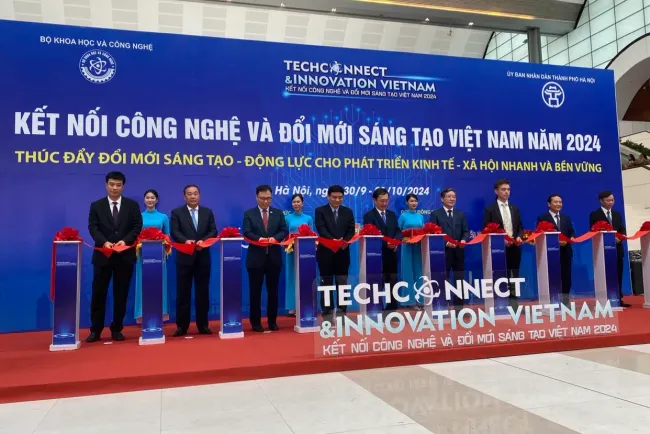
Opening of the event “Connecting Technology and Innovation in Vietnam 2024”
The “Connecting Technology and Innovation in Vietnam 2024” event, held from September 30 to October 1 in Hanoi, was a resounding success, attracting nearly 3,000 direct participants and about 10,000 online viewers. This event marked a significant milestone, celebrating the 65th anniversary of the Ministry of Science and Technology’s establishment (1959-2024) and the 70th anniversary of the Liberation of the Capital (1954-2024). The theme of this year’s event, “Promoting Innovation – Driving Force for Fast and Sustainable Socio-Economic Development,” resonated strongly with the current focus on fostering technological progress and innovation across the country.
With Vietnam positioning itself as a major player in the technology and innovation sector, this event underlined the pivotal role that innovation plays in achieving fast, sustainable growth, especially in an increasingly interconnected global economy.
Scale and Content of the Event
The event was organized within a large-scale technology demonstration space, where numerous activities focused on cutting-edge technology and innovation were presented. The exhibition space allowed businesses, researchers, and tech enthusiasts to showcase and explore advancements across various fields, such as artificial intelligence (AI), robotics, agriculture, healthcare, and education. These sectors, seen as critical to the nation’s future growth, were highlighted for their immense innovation potential.
Government representatives from ministries, sectors, and localities, alongside large enterprises, research institutes, universities, and organizations, both domestic and international, participated. The event served as a convergence point for industry leaders, scientists, and innovators to share insights, strategies, and technological solutions, setting the stage for future collaboration.
Through a mix of demonstrations, panel discussions, and keynote speeches, participants engaged in thoughtful dialogues on the state of technological advancement in Vietnam, the global context of innovation, and the potential for further development. This variety of formats enriched the event, offering in-depth exploration into both the challenges and opportunities presented by rapid technological growth.
Speech by the Minister of Science and Technology
At the heart of the event was the opening speech by Huynh Thanh Dat, the Minister of Science and Technology, who outlined the country’s vision for the future. He emphasized that science, technology, and innovation are the cornerstones of Vietnam’s socio-economic development strategy. By adopting new technologies, including AI and robotics, key sectors such as agriculture, healthcare, and construction can be significantly transformed, resulting in increased efficiency, reduced costs, and improved service quality.
Huynh Thanh Dat also proudly mentioned Vietnam’s significant progress in the Global Innovation Index (GII) 2024, where the country currently ranks 44th among 133 nations. This rise in the rankings is a testament to the nation’s growing commitment to fostering a culture of innovation. Over the past decade, this upward trend has been driven by the combined efforts of the Party, State, and business community, highlighting their dedication to technological advancement as a key pillar for economic growth and social development.
This achievement reflects the government’s targeted efforts to boost investment in research and development (R&D) and support innovative startups. Additionally, the minister highlighted that the country’s innovation-driven development strategy aims to tap into global trends, particularly in green technology and digital transformation.
The Importance of AI and Robots in Innovation
Among the event’s highlights was the in-depth discussion on the role of AI and robotics in the innovation landscape. These technologies, regarded as central to the future of many industries, have already shown their ability to boost productivity, lower operational costs, and enhance overall efficiency across multiple sectors.
For businesses in Vietnam, AI and robotics present an opportunity to close the technological gap with more advanced economies. AI’s applications in agriculture can help improve crop yields, while robotics in manufacturing is streamlining processes and reducing the reliance on manual labor. As discussed during the event, these technologies also hold immense potential in the fields of education and healthcare. AI can revolutionize learning through personalized educational tools, while in healthcare, AI-powered diagnostics and robotic surgeries are paving the way for more accurate, less invasive treatments.
The event’s sessions on AI applications in business, automation, and smart city infrastructure attracted considerable attention, as participants recognized the critical need to embrace these innovations. Panel discussions featuring AI experts delved into how AI can be used to solve some of Vietnam’s most pressing challenges, from urbanization issues to environmental sustainability.
Hanoi’s Role in the Event
Given its standing as the capital of Vietnam and a center of scientific research, Hanoi played a crucial role in the success of this event. Over 70% of the country’s science and technology organizations, universities, and research institutes are based in the city, giving it a significant advantage in spearheading innovation initiatives.
In his address, Le Hong Son, Standing Vice Chairman of the Hanoi People’s Committee, emphasized the capital’s leadership in fostering scientific research and innovation. He highlighted how Hanoi’s existing infrastructure, human resources, and favorable policies have made it a hub for technology-driven development.
Furthermore, he revealed that the amended Law on the Capital, currently under discussion, will address regulatory challenges and enable the city to further strengthen its position as a regional leader in innovation. The new legislation is expected to create a more favorable legal environment for startups and tech firms, enhancing the city’s attractiveness to both domestic and foreign investors.
International Cooperation in Innovation
International cooperation emerged as a key theme throughout the event, reflecting Vietnam’s commitment to integrating into the global innovation ecosystem. Julien Guerrier, the European Union Ambassador to Vietnam, provided a compelling perspective on the importance of cross-border collaboration. He emphasized that addressing global challenges—such as climate change, pandemic preparedness, and sustainable development—requires joint efforts between nations, industries, and research institutions.
Ambassador Guerrier pointed to the European Union’s ongoing support for Vietnam in areas like green technology and digital transformation. He also highlighted specific projects where EU and Vietnamese companies have partnered to develop cutting-edge solutions in these areas. This event, he noted, provided a crucial platform for strengthening bilateral relations and exploring new opportunities for collaboration in emerging fields like clean energy, sustainable urbanization, and environmental protection.
Representatives from Japan, South Korea, and Singapore also shared their experiences in fostering tech-based innovation ecosystems, offering valuable insights into how Vietnam can adopt similar models to accelerate its progress.
The Role of the Private Sector
Throughout the event, the contributions of the private sector were recognized as being vital to the success of the national innovation agenda. Numerous Vietnamese startups and established enterprises showcased their products and services, ranging from AI-driven solutions to robotic applications that can be applied across various industries.
Several businesses presented new initiatives to collaborate with research institutions and universities in developing future-ready technologies. These partnerships underscore the importance of R&D investments and public-private collaboration in driving forward the country’s innovation ecosystem.
By embracing open innovation, the private sector in Vietnam is rapidly evolving, adopting international best practices and forming strategic alliances with global tech giants. Many Vietnamese companies now view innovation not merely as a tool for survival, but as a critical engine for long-term growth and competitiveness.
Conclusion: A Bright Future for Innovation in Vietnam
The “Connecting Technology and Innovation Vietnam 2024” event was a pivotal moment in Vietnam’s journey towards becoming a global innovation hub. It successfully showcased the nation’s progress and its determination to become a leader in science, technology, and innovation.
Through engaging discussions, technology demonstrations, and networking opportunities, the event highlighted the immense potential of AI, robotics, and other emerging technologies to drive economic growth and improve the quality of life for all citizens. The event also provided a critical platform for fostering international partnerships, ensuring that Vietnam remains deeply integrated into the global technology ecosystem.
As Vietnam continues to make strides in innovation-driven development, the lessons learned and connections made at this event will undoubtedly play a key role in shaping the future. The country is well on its way to leveraging technology as a force for positive social change and economic resilience.
In closing, the 2024 event reinforced the importance of continuing to invest in science, technology, and innovation to ensure a prosperous and sustainable future for Vietnam. By connecting businesses, research organizations, and individuals, the event created a valuable space for exchange, learning, and collaboration, contributing to making Vietnam an innovation leader in the region and beyond.